Why the Neurobiology of Gambling Matters
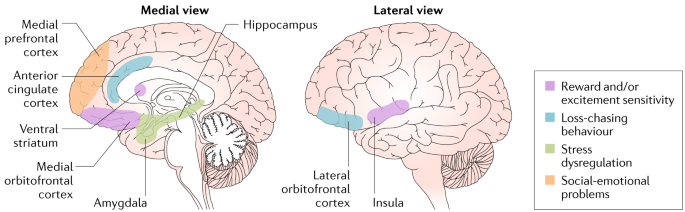
In my experience, the Neurobiology of Gambling matters because gambling is not driven only by personality or decision-making habits. It is also influenced by the brain’s reward systems, emotional regulation, learning jonitogel mechanisms, and impulse control networks. When people face gambling bets, their brains are processing excitement, uncertainty, expectation, and the possibility of financial gain or loss all at once.
This is especially important because gambling can become repetitive and compulsive for some individuals. Understanding the brain mechanisms involved helps researchers, clinicians, and the public see why gambling-related problems are not simply moral failures or a lack of willpower. They often involve measurable changes in neural processing and behavior.
There is also a strong connection to scientific Knowledge here. Research in this area combines neuroscience, psychology, psychiatry, and behavioral economics to explain how gambling influences the brain and how the brain influences gambling behavior.
My Perspective on Brain Responses to Gambling Bets
What changed my understanding of the Neurobiology of Gambling was realizing how strongly the brain responds to anticipation, not just outcome. At first, it may seem that winning money is the central driver. But over time, I came to see that the period before the result appears can be just as powerful. The uncertainty itself can activate brain systems linked to arousal and reward expectation.
That is what makes gambling so psychologically intense. A person is not only reacting to the final result of a bet. They are also responding to near-misses, streaks, environmental cues, and the emotional charge of possibility. These experiences can reinforce behavior even when actual losses outweigh gains.
Key Brain Mechanisms Involved
I think the Neurobiology of Gambling becomes easier to understand when its main brain-related mechanisms are broken down clearly.
Reward circuitry
The brain’s reward system, especially pathways involving dopamine, plays a central role in how gambling feels reinforcing. Anticipation of reward can be highly stimulating even before the outcome is known.
Decision-making networks
Regions involved in evaluating risk and reward help shape whether a person continues gambling, increases bets, or stops.
Impulse control systems
Areas related to self-regulation and inhibition influence whether a person can resist urges and make deliberate choices.
Emotional processing
Winning and losing can trigger strong emotional reactions, including excitement, frustration, and disappointment, all of which can affect future decisions.
Learning and reinforcement
Repeated gambling experiences can strengthen behavioral patterns through reward learning, especially when outcomes are unpredictable.
Common Neurobiological Patterns in Gambling Behavior
I have noticed that several patterns are often discussed in relation to the Neurobiology of Gambling.
Heightened response to uncertainty
Unpredictable outcomes can increase arousal and attention.
Sensitivity to near-misses
Events that feel close to a win may stimulate continued play even when they are still losses.
Distorted reward expectations
Some individuals may overestimate the likelihood of future wins.
Reduced inhibitory control
Difficulty stopping or limiting behavior can reflect weaker self-control processes.
Cue reactivity
Sounds, lights, locations, and routines associated with gambling can trigger craving or urge-like responses.
Practical Importance of Understanding the Neurobiology of Gambling
I believe the Neurobiology of Gambling is most useful when it helps improve prevention, education, and treatment.
Better public understanding
People can recognize that gambling problems involve brain-based mechanisms, not just poor choices.
Stronger treatment approaches
Therapy and clinical support can be designed with attention to craving, impulse control, and reward sensitivity.
Smarter prevention efforts
Policies and educational programs can target the environmental features that make gambling more compelling.
Reduced stigma
A scientific perspective can encourage compassion and more effective support.
Below is a simple overview of core mechanisms:
| Brain Mechanism |
Why It Matters |
Example in Gambling |
| Reward circuitry |
Reinforces betting behavior |
Excitement during anticipation of a possible win |
| Decision-making systems |
Evaluates risk and reward |
Choosing whether to keep betting after a loss |
| Impulse control |
Helps regulate behavior |
Resisting the urge to chase losses |
| Emotional processing |
Shapes reaction to outcomes |
Frustration after losing or thrill after winning |
| Reinforcement learning |
Strengthens repeated behavior |
Returning to gambling after unpredictable rewards |
These mechanisms show why gambling can become so compelling even when the financial outcomes are harmful.
Why the Neurobiology of Gambling Matters Beyond Research
I think the Neurobiology of Gambling matters because it gives a deeper explanation of human vulnerability. It shows how modern gambling environments can interact with ancient brain systems that evolved to pursue reward, respond to uncertainty, and learn from intermittent reinforcement.
This matters beyond science because it affects families, public health, and social policy. When people understand the biological side of gambling, they are better equipped to support prevention and treatment efforts with realism and empathy. In that sense, neuroscience does not remove personal responsibility, but it does provide a more accurate and humane framework for understanding behavior.
Final Thoughts
For me, the Neurobiology of Gambling offers one of the clearest ways to understand why facing gambling bets can become so psychologically and biologically powerful. Gambling is not only about money or entertainment. It involves reward circuits, emotion, learning, and self-control systems that can shape behavior in profound ways.
That is why this topic deserves careful attention. By understanding the brain mechanisms involved, we gain better tools for education, prevention, treatment, and compassionate discussion of gambling-related harm.
Explore our “Knowledge” category for more insightful content!
Don't forget to check out our previous article: Lottery Theory: Mathematical Approaches of Lottery Knowledge
