JAKARTA, lupincasino.com – Position Play: Leveraging Seating in Poker. Ever heard that phrase and thought, “Yeah, but how big a deal can it be?” Trust me, it’s a total game-changer. I’ll take you through how I used to mess this up, how I fixed it, and my best nuggets for nailing poker seat selection.
Position play is one of the most crucial concepts in poker strategy, significantly impacting your decision-making and overall success at the table. Understanding how to leverage your seating position can give you a substantial edge over your opponents, allowing you to win more hands and maximize your profits. In this article, I’ll share my insights on position play, its importance, and practical strategies to enhance your game.
Understanding Position in Poker
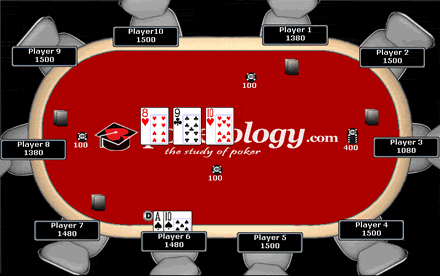
In poker, your position at the table refers to where you sit in relation to the dealer and other players. The order in which players act during a hand is determined by their position, which can be categorized into three main types:
1. Early Position (EP)
Players in early position (such as the small blind, big blind, and under-the-gun) act first in the betting round. This position is often considered the most challenging because you have less information about your opponents’ actions. As a result, you should play tighter and only enter the pot with stronger hands.
2. Middle Position (MP)
Middle position players have a slightly better advantage than early position players, as they can observe some actions before making their decisions. This position allows for a wider range of hands to be played, but caution is still advised.
3. Late Position (LP)
Late position players, particularly those in the cutoff and the button, have the most advantageous seating at the table. Acting last gives you the advantage of seeing your opponents’ moves first, so you can make better decisions. This position enables you to play a wider range of hands and apply pressure on your opponents.
The Importance of Position Play
Understanding and leveraging your position in poker can significantly influence the outcome of your hands. Here are a few reasons why position play is essential:
- Information Advantage: Players in late position can observe how opponents act before making their decisions, allowing them to make more informed choices.
- Control Over the Pot: Being in a later position gives you the opportunity to control the size of the pot. You can choose to bet, raise, or fold based on the actions of others, allowing for better pot management.
- Bluffing Opportunities: Players in late position can effectively utilize bluffing strategies. By observing their opponents’ tendencies and betting patterns, they can identify when to apply pressure and potentially force opponents to fold.
- Wider Hand Range: Players in late position can afford to play a broader range of hands, including speculative hands, because they have more information and can better evaluate the situation.
My Secret Sauce to Winning More Hands with Position Play
Here are some practical strategies to leverage position play effectively and improve your poker game:
1. Play Tighter in Early Position
When you’re in early position, focus on playing strong hands. Stick to premium hands like high pairs (AA, KK, QQ) and strong connectors (AK, AQ). This approach minimizes risk, as you’ll face many players who act after you.
2. Expand Your Range in Late Position
In late position, you can afford to be more aggressive and expand your hand range. Consider playing suited connectors, low pairs, and even weaker hands if the situation allows. This flexibility can help you exploit weaker opponents and steal blinds.
3. Observe Opponents’ Tendencies
Pay attention to how your opponents play based on their positions. Identify who plays aggressively from early position and who tends to be more passive. This information will help you make better decisions and adjust your strategy accordingly.
4. Use Position to Bluff Effectively
Bluffing is more effective from a late position. If you notice that your opponents are weak or hesitant, consider making a well-timed bluff to take down the pot. The key is to assess the situation and recognize when your opponents are likely to fold.
5. Control the Pot Size
In late position, you have the power to control the pot size. If you have a strong hand, consider raising to build the pot. Conversely, if you’re holding a marginal hand, you can choose to check or call to keep the pot manageable.
6. Be Mindful of Stack Sizes
Always consider the stack sizes of you and your opponents when playing from different positions. Short-stacked players may be more inclined to go all-in, while deep-stacked players might be more willing to engage in bigger pots. Adjust your strategy based on these dynamics.
7. Practice Patience and Discipline
Position play requires patience and discipline. Avoid the temptation to play too many hands, especially from early positions. Focus on making calculated decisions based on your position and the actions of your opponents.
Conclusion
Position play is a vital aspect of poker strategy that can significantly enhance your chances of winning more hands. By understanding the dynamics of your seating position and leveraging it effectively, you can gain a competitive edge over your opponents. Remember to play tighter in early positions, expand your range in late positions, observe your opponents, and control the pot size. With practice and discipline, you can master position play and elevate your poker game to new heights. Embrace these strategies, and watch as your success at the tables grows!
Explore our “Knowledge” category for more insightful content!
Don't forget to check out our previous article: Implied Odds: Future Value in Poker Hands
